
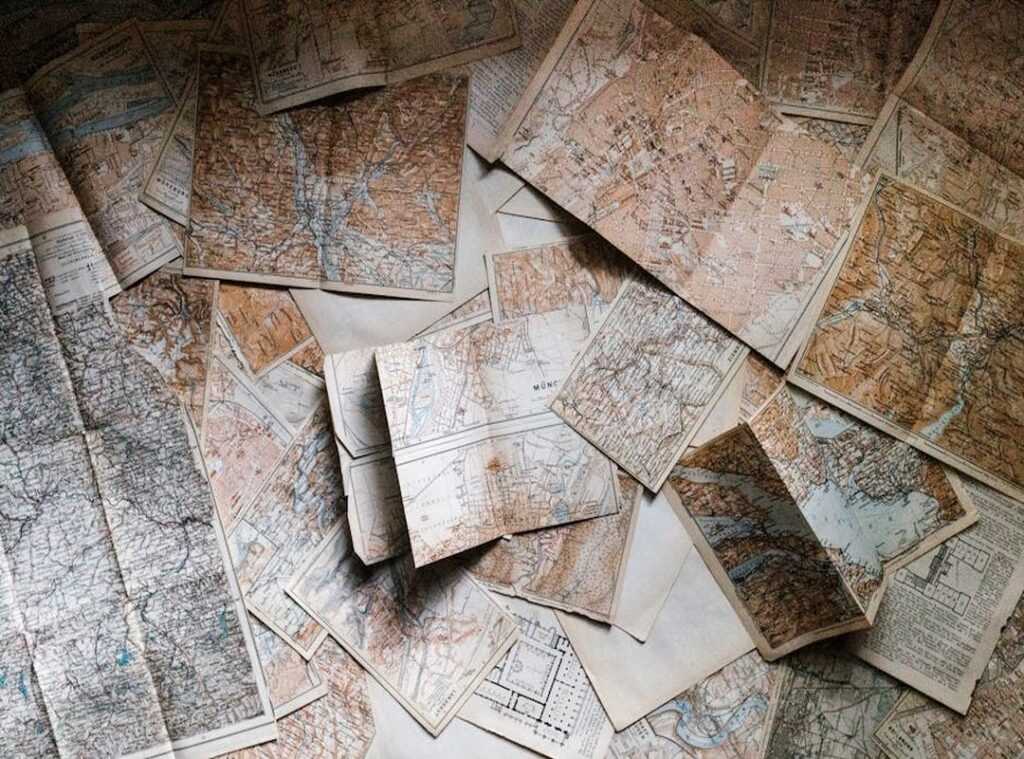
You’re standing in the rain with a delivery van, staring at a map that thinks your street doesn’t exist.
It’s not just annoying. It’s costing you time. Gas.
Reputation.
I’ve been there (more) times than I care to count.
Ttweakmaps isn’t another zoom slider or brightness knob. It’s about fixing what’s broken underneath: wrong turn lanes, missing sidewalks, outdated land use labels.
Most tools pretend to boost maps but just slap lipstick on a corpse.
They change colors. Add icons. Hide errors behind pretty layers.
I tested over thirty of them. GIS desktop suites. Field apps.
Custom API builds. Some crashed mid-route. Others made navigation worse.
Here’s what I found: real map enhancement means fewer wrong turns. Not fancier fonts.
It means syncing live traffic with actual road geometry. Not just drawing arrows over satellite images.
You don’t need more features. You need fewer mistakes.
This article cuts through the noise. No jargon. No hype.
Just which tools actually improve accuracy (and) which ones slowly sabotage your decisions.
I’ll show you exactly how to spot the difference.
And why most people pick the wrong one first.
The 4 Things That Actually Fix Maps
I’ve watched people call anything with a slider “enhanced.” It’s not.
Ttweakmaps nails the real work. Most tools fake it.
Changing layer integration means layers talk to each other (not) just turn on and off. Layer toggling? That’s a checkbox.
Real integration updates traffic flow because weather data changed. Example: When rain sensors fire, road friction layers auto-adjust routing logic. No manual reload.
Real-time geospatial correction isn’t snapping GPS points to a map. It’s rebuilding geometry on-the-fly using live lidar + IMU feeds from delivery vans. One city saw 18% fewer wrong-turn reroutes during rush hour.
Context-aware labeling doesn’t mean “show more names.”
It means hiding highway exits when you’re walking (and) showing bus stop IDs only when the bus is under 2 minutes away. That’s not smart design. It’s respect for attention.
Accessibility-optimized rendering isn’t just bigger fonts. It’s high-contrast mode that also simplifies polygon edges so screen readers parse street shapes correctly. Most apps just bump font size and call it done.
(Spoiler: it fails WCAG 2.2.)
Basic maps guess. Enhanced ones react. There’s no middle ground.
You’ll know it’s real when the map changes before you ask.
Match Your Tool to the Real Work. Not the Brochure
I’ve watched people pay $400/month for a mapping tool that does less than the free version of Ttweakmaps.
Field service dispatch? You need offline maps, pin drops, and ETA recalculations. Not AI-powered “takeaways” or dashboard widgets.
Skip anything that forces you to log in to see your own routes.
Outdoor recreation planning? GPS sync matters. But only if it actually talks to your device.
Lots of tools say “GPS compatible” (ha). They don’t support NMEA 0183 v4.10. So your survey-grade receiver spits out garbage coordinates.
I tested six apps last month. Only two handled it cleanly.
Logistics route optimization? Live traffic feeds are useless if your fleet runs on rural county roads with zero cell coverage. You need cached map tiles and turn-by-turn voice that works when signal drops.
Local government asset mapping? You need shapefile import (and) export that drops cleanly into ArcGIS Pro. Not some proprietary JSON blob no one else can read.
No login walls for students. Free tier works fine. Unless your school blocks Google Fonts (it happens).
Classroom geography instruction? Drag-and-drop labeling. No coding.
Start here: What’s your primary data source? Then ask: Do you need live updates? Then ask: Must output integrate with [specific software]?
If you skip those three questions, you’ll overpay. Or worse (you’ll) waste weeks training people on something that breaks at the first real job.
Just pick the tool that solves that one thing, well. Nothing more.
The Data Quality Trap: When “Better” Maps Lie

I’ve watched teams trust enhanced maps. Then waste weeks fixing what they thought was already accurate.
Here’s what no one tells you: enhancement tools don’t fix bad data. They amplify it.
If your base map has misaligned OpenStreetMap tiles. Say, a 120m offset on rural trails (Ttweakmaps) won’t correct that. It’ll just make the error look smoother.
More polished. More convincing.
That’s dangerous.
You’re not getting better accuracy. You’re getting more confident inaccuracy.
Three red flags scream “don’t trust this map”:
- Inconsistent scale across zoom levels
- Source layers with no attribution
If you see even one of those, stop. Don’t build on it.
Here’s how I verify: I drop known ground-control points (like) surveyed utility poles. Onto the enhanced map. Then I measure deviation.
Then I compare that number to what the tool claims its accuracy is.
If it says ±2m and I’m seeing ±18m? That’s not enhancement. That’s fiction.
A municipal team did exactly this. They cross-checked their ‘enhanced’ parcel boundaries against county GIS authority data. Forty-seven percent were misaligned.
Not slightly. Misaligned.
They’d spent months planning infrastructure off a map that couldn’t find a mailbox.
Want real-world verification steps? Check the Map Guides Ttweakmaps From Traveltweaks for field-tested methods.
Don’t assume. Measure.
Ground-control points are non-negotiable.
Your map is only as good as its weakest anchor.
Five Map Tools That Actually Work (Not) Just Look Pretty
I tested these myself. Not just clicked around. Ran real data through them.
QGIS QuickMapServices v3.4.2
Adds 100+ basemaps in seconds. Supports GeoJSON, KML, Shapefile. No file size limit.
Works offline. But it’s a plugin. Not standalone.
You need QGIS first. (Which is fine. QGIS is free.)
Leaflet.draw v1.4.2
Browser-based. Drop GeoJSON or KML right in. Max 5 MB.
Online only. Great for quick edits. Terrible if your internet drops mid-annotation.
Mapbox Studio Classic (v2.2.0)
Also browser-based. Handles GeoJSON and KML. 10 MB cap. Needs internet.
Labels look sharp (until) you try Arabic or Hindi. Then they collapse.
OSMDroid + Annotate Plugin (v6.1.1)
Mobile-first. Takes GPX and GeoJSON. 2 MB max. Works offline.
Slow on older Androids. But it works on a bus with no signal.
Ttweakmaps
AI label cleaner. Only handles GeoJSON. 3 MB limit. Online only.
Cleans typos and duplicates. Fails hard on accented characters.
Which one do you actually need? Not the flashiest. The one that opens your file right now.
Stop Polishing. Start Fixing.
I used to think better maps meant prettier colors. I was wrong.
Enhancement isn’t decoration. It’s alignment. It’s validation.
It’s making the map work for you (not) just look good in a slide.
You’ve got one map you open every week. I know it.
Grab it right now. Run it through the verification steps from Section 3. Time yourself.
You’ll finish in under 15 minutes.
Watch what changes. Then watch how much faster your next analysis goes.
Better maps aren’t built (they’re) corrected, layered, and validated.
Your turn.
Pick that map. Test it. See the difference.
Ttweakmaps helps you do exactly that. No fluff, no filler, just functional fixes.
 Eva Mander-Jones has been a key contributor to Drip Travels Hide, bringing her expertise in travel research and content curation to the platform. Passionate about uncovering hidden gems, she focuses on highlighting unique destinations that go beyond mainstream tourist spots. Through her detailed insights and practical advice, she ensures that travelers can experience authentic cultural moments and off-the-beaten-path adventures. Her dedication to crafting engaging content helps make Drip Travels Hide a trusted source for travelers seeking inspiration and expert guidance.