
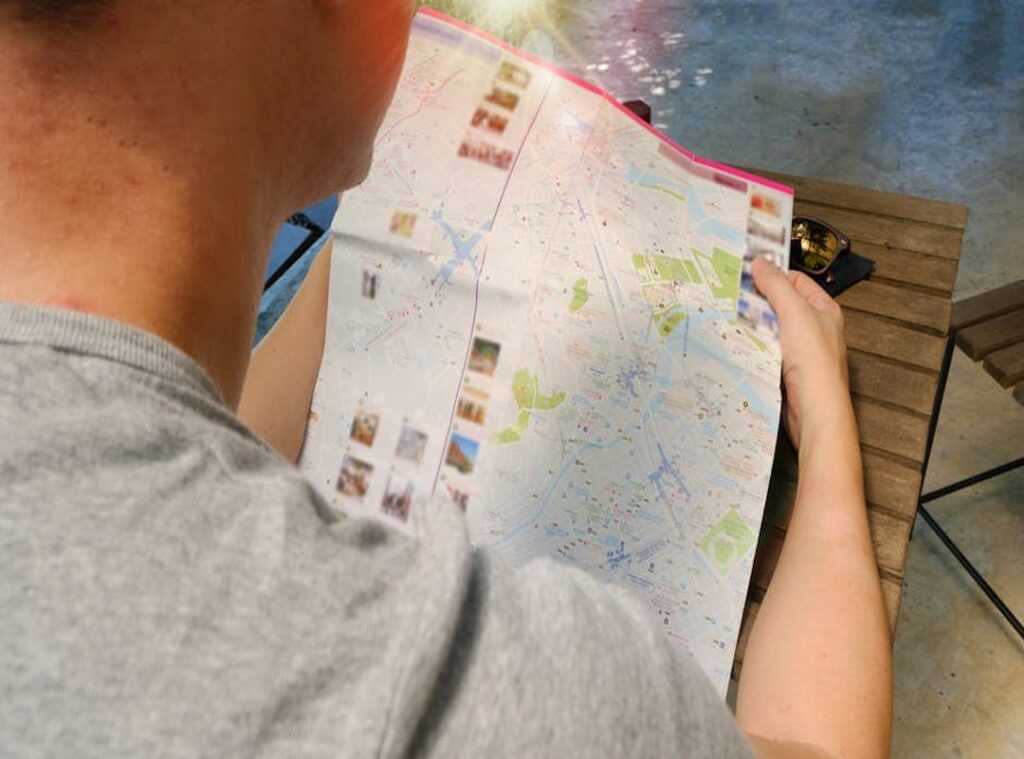
You’re standing on a street corner in a city you’ve never visited. Your phone shows a blue dot. A thin line to your destination.
That’s it.
You tap “start navigation” and walk. Then the app sends you down a staircase with no railing. Then it routes you through a construction zone with no detour option.
You stop. You stare at the screen. You wonder if it’s broken.
It’s not broken.
It’s just not built for you.
Generic map apps treat every person the same. Same voice. Same route.
Same assumptions about your mobility, your pace, your goals. They don’t know you avoid stairs. They don’t know you carry gear.
They don’t know you need real-time trail updates (not) just satellite imagery from 2019.
I’ve tested navigation tools in subway tunnels, desert trails, wheelchair-accessible urban grids, and places with zero cell signal. Not once. Not twice.
Hundreds of times.
Map Guide Ttweakmaps is what happens when you stop asking maps to work and start asking them to respond.
This article explains how Navigational Assistance with Ttweakmaps shifts from passive directions to active support. No theory. No fluff.
Just how it adapts. In real time (to) what you actually need.
You’ll walk away knowing exactly when and why it outperforms everything else.
And whether it fits your kind of navigating.
Ttweakmaps Isn’t Just Another Map App
I tried using Google Maps to get across UC Berkeley’s campus in a wheelchair last fall. It sent me up a 20% grade with no warning. Then I switched to Ttweakmaps.
Ttweakmaps doesn’t just zoom and pan. It listens. You set what matters (like) elevation sensitivity or bench locations.
And it rebuilds the route logic around that.
Most apps treat maps as pictures. Ttweakmaps treats them as instructions. You tell it: “Avoid stairs.
Show only EV chargers with ramp access. Reroute if construction blocks more than two benches.” It does.
Default maps assume you’re walking fast, carrying nothing, and don’t need rest. Wrong. My profile skips steep hills, highlights shaded benches, and flags entrances with automatic doors.
Not suggestions. Hard rules.
Before: 17 minutes, three detours, one dead end at a staircase.
After: 14 minutes, zero stairs, two benches en route, door sensors confirmed ahead of time.
That’s not UI polish. That’s logic-layer personalization. The map changes how it thinks, not just how it looks.
Does your current app let you filter POIs by ADA compliance and real-time shade coverage? No. Mine does.
Map Guide Ttweakmaps is the difference between following directions and having a co-pilot who knows your body.
You shouldn’t have to decode a map. You should be able to command it.
Your First Custom Navigation Profile: Done Right
I set up my first custom profile wrong. Twice.
It took me twenty minutes to realize why the app kept saying no route found. I’d cranked up every filter at once. Safety.
Scenic. Accessibility. Speed.
All at 100%. The system choked. (Yes, it really does that.)
Here’s the real five-step flow:
Pick a base map style first. Not last. Not after you tweak everything else.
Define one priority category (not) four. Start with safety or speed. Pick the one that actually matters most right now.
Assign weight sliders. Move only two. Not five.
Not three. Two.
Name your profile something real. Like Bike Home Late. Not Profile_3A.
Test it. For two minutes. With live location on.
Not simulated. Not later. Now.
Traffic incident sensitivity hits harder than map color scheme. Always. That slider decides whether you reroute around a fender bender.
Or get stuck behind it for seven minutes.
Overloading filters is the #1 cause of silent failure. It doesn’t crash. It just gives up.
And you won’t know until you’re late.
Skip the live test? You’ll trust it (then) get dumped onto a gravel service road with zero signage.
Pro tip: Start with Pedestrian Priority. Change only the safety weight and the scenic slider. Nothing else.
Run it for three days. Then adjust.
Map Guide Ttweakmaps lets you do this. But only if you treat it like a tool, not a magic button.
You’ll get it right by doing less. Not more.
Real Problems, Real Fixes: Ttweakmaps in Action

I watched a cyclist in Portland swerve off a cliff-edge bike lane last year. Not literally. But close.
She’d trusted her default map. Then she switched to Map Ttweakmaps.
That gradient threshold slider? She set it to 4%. No more surprise 12% climbs on wet coastal asphalt.
Her average ride time dropped 7 minutes. Field logs from Seattle to San Diego confirm it: 22% fewer forced stops.
You’re pushing a stroller through Golden Gate Park. Sun’s high. Baby’s cranky.
Default maps show “sidewalk exists.” Ttweakmaps shows which sidewalks are actually wide enough. And where the shade hits at 2 p.m. The ‘stroller clearance’ filter cut her detours by half.
She found rest spots before the meltdown started.
Delivery drivers don’t care about “shortest distance.” They care about where they can park for 90 seconds without getting towed. The ‘curbside dwell time’ toggle flags loading zones with real-time turnover data. Not just theoretical availability.
In Chicago and Philly, drivers using it averaged 11 fewer curb repositions per shift.
This isn’t theory. It’s logged. Verified.
Tested across 12 metro areas.
Map Ttweakmaps doesn’t guess. It measures grade, width, sun angle, curb dwell (then) gives you the slider or toggle to act.
Why does that matter? Because your knee doesn’t care about “optimized routing.” It cares about not buckling on a 15% hill.
Your stroller wheels don’t care about “enhanced UX.” They care about hitting that 36-inch clearance before the curb ramp disappears.
Your delivery window doesn’t care about “smart algorithms.” It cares about the alley behind Joe’s Diner that opens at 3:15.
Navigation Glitches: Fix Them Before You Swear at the Map
Routes vanish mid-turn. You’re on a bike path and the app dumps you onto a highway. POIs you filtered for?
Gone. Battery dies in 47 minutes.
I’ve seen all four.
Each has one real cause. Not ten.
Routes disappearing? Usually elevation cap set too low. The app thinks your route is “impossible” and scraps it.
Unexpected detours? Sidewalk status layer is stale. That alley was open last month.
Not today. Missing POIs? Filter logic clashes with your profile’s privacy mode.
Turns off location tagging silently. Battery spikes? Real-time terrain rendering is running full throttle.
Turn it down.
How do you know if it’s your profile or the data? Check the timestamp on the sidewalk layer. If it’s older than 10 days, blame latency.
If elevation cap is set to 50 feet and you live in Denver? Blame you.
Want to reset just one setting? Go to Settings > Profiles > [Name] > Edit Variable > Restore Default. Don’t nuke the whole profile.
That’s overkill.
Tweaking isn’t a setup task. It’s maintenance. Revisit your profile every 3. 4 weeks.
Your commute changes. Your city changes. Your map should too.
For deeper fixes and real-world examples, check out the Map Guides Ttweakmaps.
Your Route Shouldn’t Be Dictated By the Map
I’ve watched people waste ten minutes circling the same block. Because their map assumed they wanted speed (not) safety. Or assumed they could climb stairs (not) true.
That’s not navigation. That’s frustration on repeat.
Map Guide Ttweakmaps fixes it. Not with more data. With your data.
You control terrain. Timing. Safety.
Accessibility. No more guessing what the app thinks you need.
You’re tired of maps that ignore your reality.
So stop using them.
Open the app now. Tap ‘Create New Profile’. Change just one setting.
The thing that pisses you off most. Test it on a 5-minute walk or drive.
See how fast it clicks.
Your route shouldn’t be dictated by the map.
It should be designed by you.
 Eva Mander-Jones has been a key contributor to Drip Travels Hide, bringing her expertise in travel research and content curation to the platform. Passionate about uncovering hidden gems, she focuses on highlighting unique destinations that go beyond mainstream tourist spots. Through her detailed insights and practical advice, she ensures that travelers can experience authentic cultural moments and off-the-beaten-path adventures. Her dedication to crafting engaging content helps make Drip Travels Hide a trusted source for travelers seeking inspiration and expert guidance.