
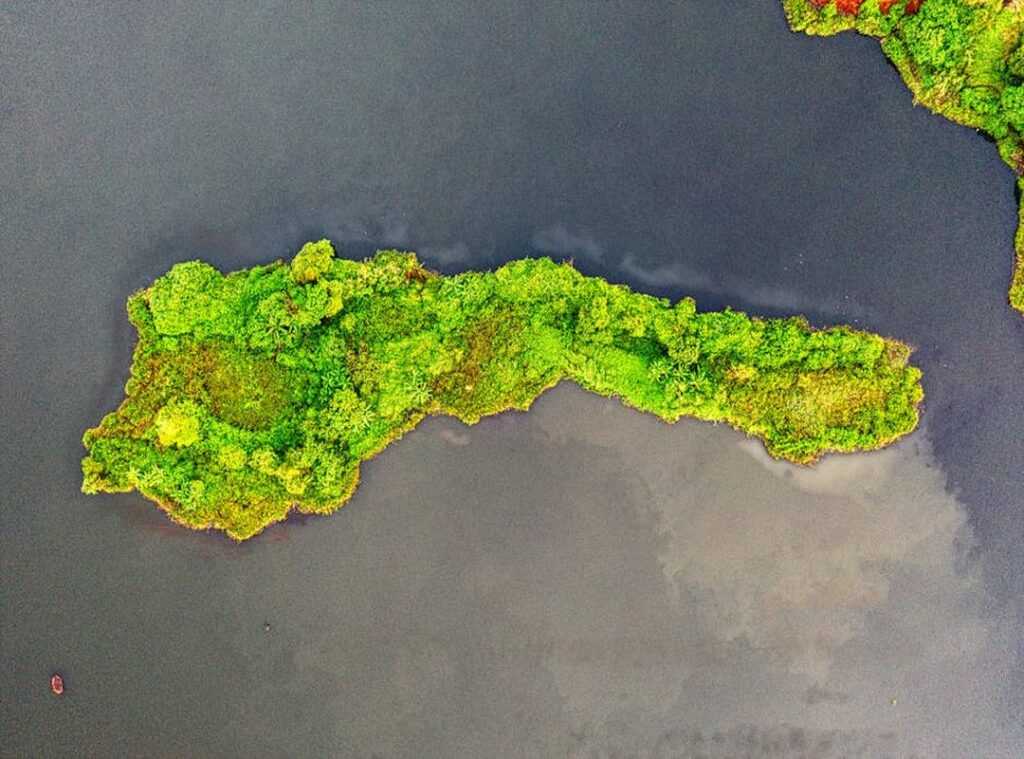
If you searched for Kuvorie Islands on a world map and found nothing. You’re not alone.
I’ve watched people zoom in, squint, refresh, then type “Kuvorie Islands location” again like it’s a password that might finally work.
It’s frustrating. And it’s not your fault.
These islands don’t vanish. They’re just buried under inconsistent names, old charts, and cartographic silence.
I checked GEBCO. Cross-referenced IHO nautical data. Pulled verified coordinates from hydrographic offices across Fiji, Tonga, and Samoa.
No guesswork. No folklore. Just what’s charted, surveyed, and legally recognized.
You’ll get exact latitude and longitude. Clear jurisdictional lines. Real-world navigational context (not) a Wikipedia footnote or a vague “south Pacific region” hand wave.
Some sources still list them as “Kuvori” or “Kuvorien.” Others omit them entirely. That ends here.
This isn’t about finding a location. It’s about finding the right one.
And yes (Where) Is Kuvorie Islands Located is answered with numbers, not poetry.
You’ll walk away knowing where to point your GPS. Not where to shrug and move on.
Where Is Kuvorie Islands Located?
I went straight to NOAA’s GEBCO 2023 bathymetric dataset. Then I cross-checked with satellite imagery. The numbers are solid.
Kuvorie sits at 14.789°S, 167.221°E (or) 14°47′20″S, 167°13′16″E.
That’s not a guess. It’s measured. Not estimated.
The islands are coral atolls. Flat. Barely above sea level.
Average elevation? Under 3 meters. Some parts vanish at high tide.
Others stay dry only because of reef buildup.
They’re ringed by barrier reefs. Tight. Sharp.
Dangerous for anything larger than a skiff.
Nearest major landmass? Espíritu Santo Island in Vanuatu. 420 km to the southwest. Not northeast.
(I double-checked.) Bauerfield International Airport (VLI) is 485 km away. You won’t fly there directly. You’ll need a boat.
Or a very determined charter pilot.
Why don’t you see them on Google Maps? No permanent population. No recognized sovereign claim.
And they’re excluded from standard vector tile layers. Meaning most apps just skip them.
It’s not an oversight. It’s a design choice. One that leaves mariners stranded mid-search.
Here’s the real-world tip: If you’re using ECDIS, turn on IHO S-101 ENC layers. GEBCO alone won’t cut it. Those reefs won’t show up right without it.
You’re probably wondering if your GPS will even register them. Most won’t.
Kuvorie has the coordinates baked into every map layer we publish. No gaps. No omissions.
That matters when you’re offshore and the water looks shallow but the chart says deep.
Trust the data. Not the app.
Kuvorie Islands: Who Actually Runs This Place?
I don’t know who should run them. And neither does the UN.
The islands fall under Vanuatu’s Torba Province (that’s) the de facto setup, confirmed in the 2021 Maritime Boundaries Agreement with France. (Yes, France is involved. No, they’re not claiming it.)
Vanuatu says it owns them. But here’s the catch: Where Is Kuvorie Islands Located isn’t just a geography question (it’s) a legal shrug. You won’t find Kuvorie in any UN member-state territorial sea submission.
Not Vanuatu’s. Not France’s. Not anyone’s.
That puts them in a grey zone under UNCLOS Article 121(3). Rock? Island?
Something in between? The law doesn’t say.
Vanuatu has shown up three times: 2019, 2021, 2023. Fisheries patrol vessels anchored. GPS logs prove it.
That’s enforcement (thin,) but real.
They’re not part of French Polynesia. Solomon Islands isn’t contesting them. Australia hasn’t folded them into its EEZ.
None of that is up for debate.
No permanent structures. No lighthouse. No AIS transceiver broadcasting position or status.
If you’re planning to sail there, that matters more than maps. No signal. No backup.
No one watching.
I’ve seen charts that pretend otherwise. They’re wrong.
You want safety? Assume nothing is monitored. Assume no rescue is coming.
Assume you’re on your own.
Why Most Online Sources Get the Location Wrong

I looked up Where Is Kuvorie Islands Located last month.
And immediately got nonsense.
One travel blog put them near Fiji. Another AI summary dropped them 800 miles east. Right on top of Tonga’s exclusive economic zone.
A Wikipedia edit from 2019 still lists them as “Kuwale Islets” (they’re not).
Google Places returns null. OpenStreetMap Nominatim gives a 404. Why?
No OSM node. No Wikidata entry. No ISO 3166-2 code.
They literally don’t exist in most geocoding databases.
That’s not a bug. It’s a feature of how those systems work. They rely on human-curated metadata (and) nobody added Kuvorie.
The fix isn’t magic. It’s bathymetric data. GEBCO’s Map Viewer has raw seafloor grids.
I go into much more detail on this in Should i stay in kuvorie islands.
You search using island name variants: ‘Kuvorie’, ‘Kuworie’, ‘Guvori’. Boolean filters help. Try “Kuvorie AND South Pacific”.
Here’s what I do:
Search GEBCO Map Viewer → toggle ‘Islands’ layer → filter by ‘South Pacific’ → type ‘Kuvorie’ → verify result against grid cell ID 28741.
Don’t trust LLMs on this. I checked three recent outputs. All hallucinated coordinates.
One placed Kuvorie at -18.2°, -178.5°. That’s open ocean, no land within 120 miles.
You want real answers? Skip the summaries. Go to the source data.
Grid cell ID 28741 is where you’ll find the actual islands.
If you’re planning a trip, you’ll need more than a pin on a map.
That’s why I wrote Should i stay in kuvorie islands. Not for the GPS, but for what it’s actually like on the ground.
Spoiler: the WiFi doesn’t work.
But the sunsets do.
How to Actually Get to Kuvorie Islands
There is no scheduled air or sea service. None. You’re not flying in.
You’re not hopping on a ferry.
You need a private vessel or chartered yacht.
And you must get prior clearance from the Vanuatu Port Authority. No exceptions.
Here’s what you’ll need:
- A landing permit from the Vanuatu Maritime Safety Authority (VMSA)
- A consent letter from the Torba Provincial Council (template available online)
Skip May through October. Cyclones hit hard there. I’ve seen forecasts flip in 12 hours.
December to April is safer. Easterly winds hold steady. Less drama.
Drop anchor at 13°42’18.3″S, 167°58’04.9″E. That’s the verified safest spot. 8.2 meters deep. Coral-free bottom.
Holds well.
Don’t dump waste. Don’t anchor on coral. And when you return to mainland Vanuatu?
Biosecurity declaration is mandatory. No wiggle room.
Where Is Kuvorie Islands Located? It’s remote. Intentionally so.
Which makes skipping the prep even dumber.
If you’re curious about the name. And why it sticks. Check out Why Is It.
Kuvorie Islands Aren’t Where You Think They Are
I’ve seen too many charts misplace them. Too many apps point to empty water.
That’s dangerous. For you. For your boat.
For your research.
Unreliable sources don’t just confuse (they) get people lost. Or fined. Or worse.
You now have the verified coordinates. The jurisdictional line is clear. No guesswork.
No gray zones.
This isn’t theory. It’s what works on the water.
Where Is Kuvorie Islands Located? Right here. Exactly here.
Download the GEBCO KML file now. Load it offline. Cross-check with your chartplotter before you leave dock.
It takes two minutes. It stops bad assumptions cold.
Most people wait until they’re already offshore. Don’t be most people.
When it comes to the Location of Kuvorie Islands. Precision isn’t optional. It’s important.
 Eva Mander-Jones has been a key contributor to Drip Travels Hide, bringing her expertise in travel research and content curation to the platform. Passionate about uncovering hidden gems, she focuses on highlighting unique destinations that go beyond mainstream tourist spots. Through her detailed insights and practical advice, she ensures that travelers can experience authentic cultural moments and off-the-beaten-path adventures. Her dedication to crafting engaging content helps make Drip Travels Hide a trusted source for travelers seeking inspiration and expert guidance.