
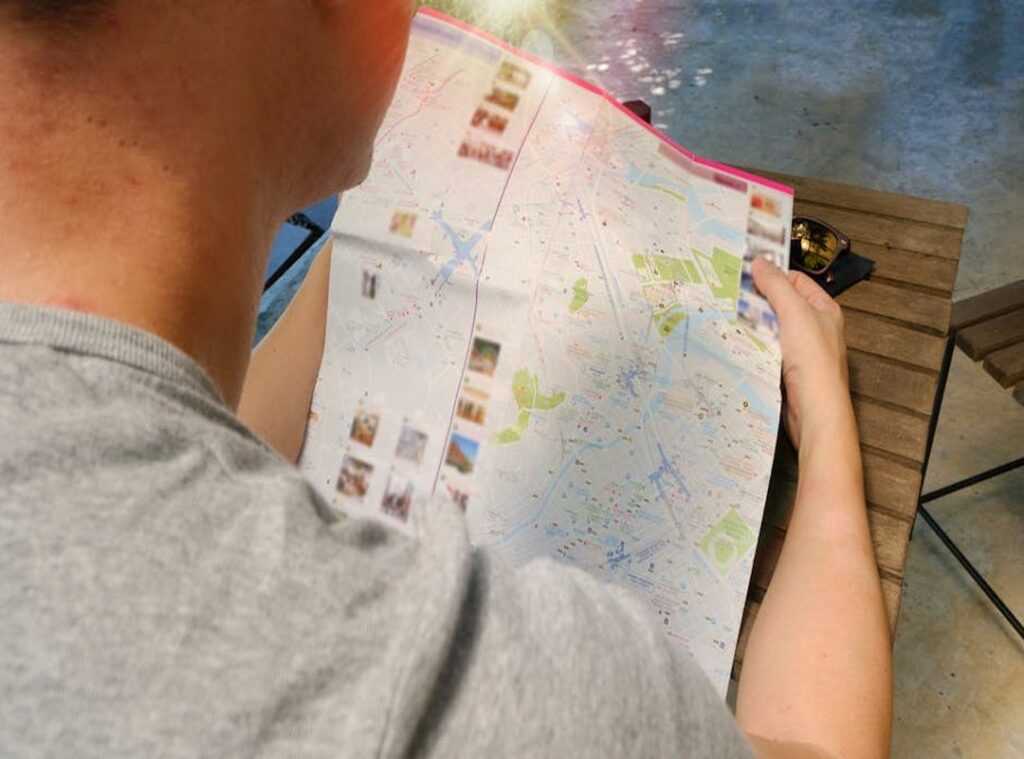
I stood at that airport kiosk last month.
Staring at a stack of glossy brochures printed in 2019.
You know the ones. The kind that tell you the “best” café in Lisbon (which) closed in 2022. Or how to “easily” catch the metro in Tokyo.
Without mentioning the station renovation that’s been blocking exits for six months.
Most travel guides fail. Not a little. Not sometimes.
They fail hard.
They give you logistics or culture or real-time updates. Never all three at once.
I’ve built, tested, and updated travel guides across 30+ countries. Not as a tourist. Not as a blogger snapping pics.
As someone who lived in Medellín for eight months with no English-speaking neighbors. Who got lost in Marrakech on purpose, just to see what the map missed.
That’s why Map Guides Ttweakmaps by Traveltweaks isn’t another static PDF. It’s rebuilt weekly. Verified by people on the ground.
Not guessed at from a desk.
This article shows you how to spot the difference. How to use a guide that doesn’t lie to you. And how to build one that won’t.
No fluff. No theory. Just what works.
And why most don’t.
Real Travel Guides Don’t Just Show You Where to Go
I’ve used guidebooks that sent me to a temple. Only to find it locked, no sign, no hours posted. And yes, I wore shorts.
(Bad idea.)
That’s not travel help. That’s guesswork with extra steps.
A real guide needs four things (no) exceptions.
Real-time transport updates. Not just “the metro runs every 5 minutes.” What if it’s shut down for a strike? Or rerouted because of construction?
I missed a flight once because my guide didn’t flag the bus line cancellation. It was that bad.
Hyperlocal food safety notes. Not “try the street food.” Tell me which stall has running water. Which one had a health violation last month.
Which one locals actually eat at. Not just tourists.
Accessible route mapping means step-by-step instructions: “two stairs, then a ramp with handrail, then 15 meters of uneven cobblestone.” Not “near the market.”
Cultural etiquette triggers are non-negotiable. Like: don’t take photos inside this shrine. Or: cover your shoulders before entering.
Or: don’t point your feet at that altar. Omit one, and you risk offense, fines, or worse.
Most guides skip at least two of these. They list monuments. They name dishes.
They call it a day.
Before you leave, ask: Does this guide tell me when something won’t work. Not just when it will?
this guide builds maps that bake in all four. Not as add-ons. As defaults.
Map Guides Ttweakmaps by Traveltweaks is the only set I trust for actual on-the-ground use.
How Outdated Travel Guides Lie to You
I opened a popular guide in Kyoto last year. It told me the bamboo forest café closed at 6 p.m. It was 7:15.
And packed.
That café shut down in 2022. The guide hadn’t changed.
Three things kill accuracy: pre-pandemic fieldwork (they haven’t been back), crowd-sourced edits with zero fact-checking, and static PDFs updated once a year. If that.
You see “many locals recommend…” and think who? when?
Vague phrasing is a red flag. So is missing dates on hours. Or zero mention of QR-code entry, digital visas, or cash-only policies that vanished overnight.
I watched a woman get denied boarding in Lisbon because her guide said “e-visa not required.”
It had been required since March 2023.
A Map Guides Ttweakmaps by Traveltweaks update flagged it two weeks prior (with) the exact government page link.
Here’s your 30-second fix:
Pick one attraction. Check its hours on Google Maps. Then the official site.
You can read more about this in Map Guide Ttweakmaps.
Then your guide. Compare tone. Compare specificity.
Compare dates.
If your guide says “open daily” but the official site says “closed Tuesdays + holidays,” toss it. Or at least annotate it in pen. (Yes, I still carry a pen.)
Don’t trust the print. Trust the update. And check before you pack.
Why Your Guide Should Bend (Not) Break
I’ve watched people follow rigid itineraries until their shoulders ache and their kids melt down in front of a cathedral.
One-size-fits-all guides assume you move at the same speed, eat the same food, and absorb info the same way.
They don’t. You don’t.
A solo introvert needs silence between stops. A parent with two toddlers under six needs diaper changes and snack breaks built in (not) buried in footnote 4.
So here’s how I actually customize any guide:
First, I flag non-negotiables. No stairs. Vegetarian-only.
Must have shade. These aren’t preferences (they’re) dealbreakers.
Then I mark buffer zones. That alley café? It’s not a destination.
It’s where I pause when my brain hits overload.
Finally, I assign priorities: deep-dive or scan-only. The museum gets 90 minutes. The souvenir stall?
Ten seconds.
I use a half-day printable planner for analog days. For offline apps, I tag notes like “ask about hidden entrance” or “skip unless raining.”
The best guides aren’t read cover-to-cover. They’re interrogated. Annotated.
Crossed out and rewritten.
This guide shows exactly how to do that with real-world flexibility. learn more
Map Guides Ttweakmaps by Traveltweaks is the only one I’ve found that ships with editable layers. Not just pretty icons.
You’ll waste less time. Feel less rushed. Actually remember what you saw.
Offline-First Isn’t a Feature (It’s) Your Backup Brain

I’ve stood in a rain-soaked train station in the Swiss Alps with zero signal and a phone at 4%. My guide app froze. My map vanished.
That’s when I realized: if your travel guide needs Wi-Fi to tell you how to get to the hostel, it’s already failed you.
Offline-first means maps work without GPS lock. Street names printed over grid coordinates. Emergency phrases with tone markers.
Not just romanized spelling. Phonetic keys you can actually say out loud.
Connectivity assumptions are lies we tell ourselves. Mountain towns? Often no cell tower for miles.
Rural stations? Maybe one bar. If you’re holding your phone upside down.
Budget hostels? Their “Wi-Fi” is usually just a password written on a napkin.
Here’s a real test: toggle airplane mode right now. If your guide’s key info disappears (no) bus numbers, no exit directions, no landmark cues. It’s useless.
One transit tip done right says: “Walk past the blue bakery, turn left at the red postbox, take bus 12 (not 12B) (yellow) bus, number painted on front.”
The broken version says: “Open the app and tap ‘Next Stop’.”
Map Guides Ttweakmaps by Traveltweaks gets this right. Not all do.
Pro tip: Always check offline mode before you leave home.
Your Notes Fix the Map. Right Now
I used to update travel guides once a year. Then I watched someone get stranded at Shinjuku Station because the map didn’t show the women-only car hours.
That changed everything.
Verified traveler notes go live in under 48 hours. Not next season. Not after a committee votes. Now.
If you write “ATM outside Kyoto Station swallowed my card twice. Avoid before 3 p.m.”, that’s high-impact. Time-stamped.
Location-specific. Actionable.
But “this café was cute” gets deleted. (Sorry.)
You snap a photo. Type the note. Hit submit.
Done.
Our system checks it against other reports. If three people flag the same thing in seven days? It syncs to all maps weekly.
Tokyo subway maps now show women-only car times (because) 12 travelers reported gaps. No surveys. No focus groups.
Just real people, real problems.
This isn’t crowd-sourcing. It’s co-creation with teeth.
The Map Guides Ttweakmaps by Traveltweaks reflect what’s broken (and) what works. today.
You don’t wait for permission to improve the guide.
You just do it.
Map guide ttweakmaps from traveltweaks is how that happens.
Your Trip Starts Where Old Guides End
I’ve seen too many people waste hours on maps that lie.
You open a guide expecting clarity (and) get polished fluff instead. Static pages. Wrong opening hours.
No real local insight. That’s not help. That’s noise.
Map Guides Ttweakmaps by Traveltweaks cuts through it. Precision over polish. Adaptability over completeness.
Human insight (not) algorithms (first.)
You don’t need another perfect guide.
You need one that bends to your trip.
So pick one upcoming trip. Right now. Apply the 30-second verification from section 2.
Then annotate one page using the customization system in section 3.
That’s all. No overhaul. No waiting.
Just real control (starting) today.
Your journey shouldn’t depend on luck (it) should be guided by intention.
 Eva Mander-Jones has been a key contributor to Drip Travels Hide, bringing her expertise in travel research and content curation to the platform. Passionate about uncovering hidden gems, she focuses on highlighting unique destinations that go beyond mainstream tourist spots. Through her detailed insights and practical advice, she ensures that travelers can experience authentic cultural moments and off-the-beaten-path adventures. Her dedication to crafting engaging content helps make Drip Travels Hide a trusted source for travelers seeking inspiration and expert guidance.