
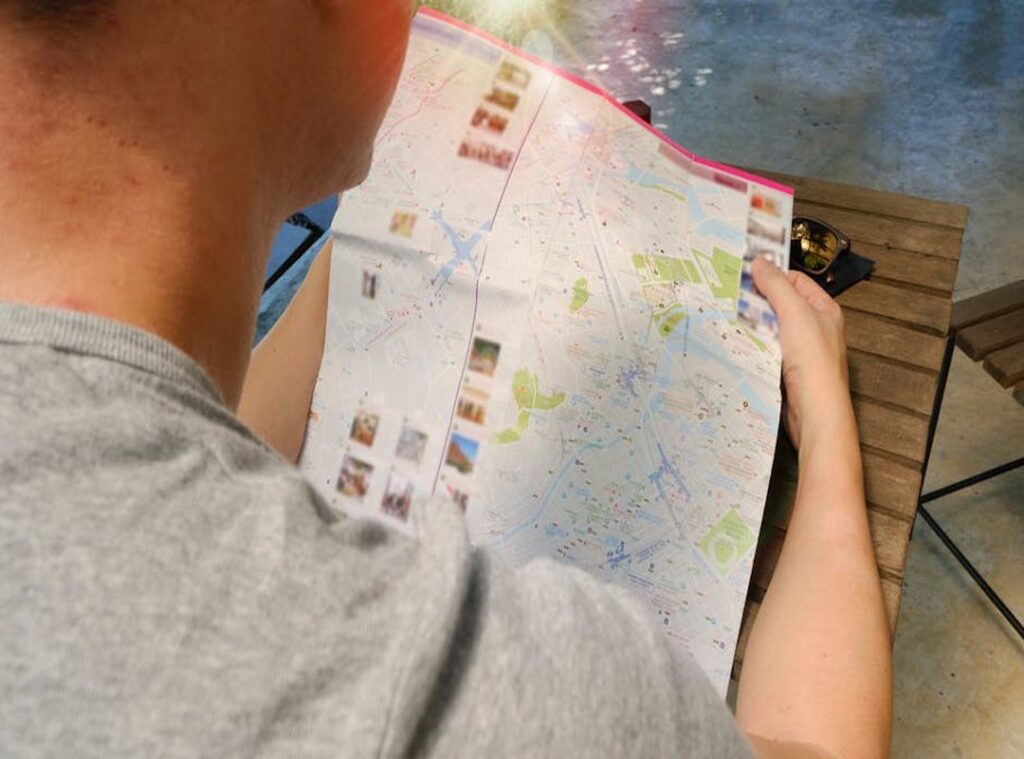
I’ve stood in front of that wall of maps.
You know the one.
Rows of glossy paper, plastic-coated trails, metro schematics, and tiny-font world atlases. All screaming for attention while you stand there frozen.
Or worse. You’re scrolling. Three apps open.
Five browser tabs. A YouTube video halfway through. And still no idea which map actually works where you’re going.
Here’s what I know: most travelers pick the wrong map. Not once. Over and over.
Hiking trail app? Useless on a ferry in Croatia.
Offline city map? Crashes when you need it most. In a tunnel under Lisbon.
Metro app? Worthless if your phone dies in rural Japan.
I’ve tested maps in 30+ countries. On foot. By bike.
On ferries. In villages with zero signal.
Not theory. Real trips. Real failures.
Real fixes.
This isn’t a list of map types. It’s about matching your trip (your) pace, your gear, your tolerance for getting lost. To the right tool.
No fluff. No hype. Just what works.
And what doesn’t.
Map Guide Ttweakmaps From Traveltweaks is how you skip the guesswork.
Why Generic Maps Lie to You
I’ve watched people walk straight into a dead end because their app said “1 min away.”
It wasn’t. It was a 20-minute detour up a hill with no sidewalk.
Standard tourist maps skip what matters: real sidewalks, stair counts, local bus stop names, and whether that alley is safe at night.
They inflate landmarks (yes, the Eiffel Tower is big. But your map doesn’t need to drown out the metro entrance next to it).
Digital apps fail offline. Tokyo subway maps in English vanish when you lose signal. And good luck reading kanji-only signage mid-transfer.
Paper maps? Try finding elevation on a flat city grid in Granada. GPS units bark directions in English while locals speak Andalusian Spanish.
And ignore pedestrian shortcuts entirely.
That’s why I use the Trip Profile Filter. Three questions: How long are you staying? How do you move?
What’s your data situation? Answer those before opening any app.
Ttweakmaps builds maps around those answers (not) algorithms guessing what you might want.
Map Guide Ttweakmaps From Traveltweaks is the only guide I trust for this.
Battery life matters more than pixel density.
Offline reliability beats flashy animations every time.
You don’t need more data.
You need less noise.
Travel Maps That Don’t Lie to You
I’ve used maps that claimed “offline mode” and froze the second I hit a tunnel. That’s not offline. That’s wishful thinking.
Offline-first design means it works before you lose signal (not) after you download tiles and pray. Test it: turn off Wi-Fi and cellular, open the app, zoom in, search for a café, get directions. If it stutters?
Trash it.
Multilingual POIs aren’t about translation. They’re about survival. A sign in Thai script + romanized spelling saved me from walking into a temple’s restricted zone.
If your map shows “Wat Arun” but not “วัดอรุณ” or “Wát À-rùn”, it’s useless in Bangkok.
Tap a pin. See only vegan options? Good.
Tap again. Now show only entrances with ramps? Better.
Contextual layer toggles mean the map adapts to your needs. Not the developer’s idea of what you should want.
Walking time isn’t distance divided by 5 km/h.
It’s elevation, cobblestones, stairs, and that one alley where Google says “2 min” and locals say “just take the bus.”
If the map ignores terrain, it lies.
Local emergency contacts belong on the pin, not buried in a menu.
Tap “Police” in Lisbon and get the number and the nearest station (no) copy-paste, no dialing errors.
The Map Guide Ttweakmaps From Traveltweaks nails three of these. Not all five. I tested six apps last month.
Your Travel Map Stack Isn’t One App (It’s) Three
I stopped trusting single-map solutions after getting lost in Sintra because Citymapper didn’t show the trailhead. And Organic Maps had no bus times.
A map stack means using two or three tools at once. Not as backup. As teammates.
For Portugal last year: Organic Maps handled hiking trails and offline rural roads. Citymapper covered Lisbon metro, real-time delays, and tram lines. And I dropped custom pins into Google My Maps for family-friendly cafes, pharmacies, and that one pastel de nata spot everyone raves about.
You can read more about this in Map Guides Ttweakmaps by Traveltweaks.
You must cross-check. I compare street names between Organic Maps and OpenStreetMap (especially) where recent edits pop up (check the OSM history tab). Then I pull the local transport authority’s PDF schedule and verify bus stop names and locations.
If they don’t match, I skip that stop.
Does your map show “Rua do Carmo” but the official PDF says “Travessa do Carmo”? That’s not a typo. That’s a trap.
I built a 7-step pre-trip checklist for this. Yes/no toggles. Clear fixes if something fails.
I wrote more about this in Map Guides Ttweakmaps From Traveltweaks.
You’ll find it in the Map guides ttweakmaps by traveltweaks.
It includes verifying ferry terminals against port authority maps. And checking whether “open” on Google Maps actually means “open to foreigners”. Some rural post offices aren’t.
Don’t assume. Don’t guess.
Download the checklist. Print it. Check it twice.
Map Guide Ttweakmaps From Traveltweaks is the only thing I’ve found that forces you to do this right.
Paper Maps Still Kick Digital’s Ass (Here’s Why)
I’ve watched people panic in Venice alleys while their phone shows 12 overlapping icons. Their digital map is busy. Confusing.
Useless.
Paper maps win in four real situations:
- Historic districts with alleyways too narrow for GPS to resolve
- Multi-day wilderness trips where your battery dies before your water does
- Countries that throttle or block map servers (looking at you, Iran and China)
- Group travel where Aunt Carol still thinks “Wi-Fi” is a sandwich
You think QR codes on paper are gimmicks? Try scanning one mid-rain in Kyoto while listening to a voice guide about temple history. It works.
I use Xodo to add hyperlinked notes directly onto PDF maps. Free. No cloud sync needed.
My go-to move: fold a large regional map into an accordion. Then slap color-coded tape over the three routes I actually need. One tactile landmark.
Like a raised dot on a bridge (gets) embossed with a coin. You’ll feel it in your pocket.
Left side of that photo? A screen drowning in icons. Right side?
Clean paper. Three lines. One bump you can find blindfolded.
Digital tools should support the map. Not replace it.
That’s why I keep coming back to the Map Guide Ttweakmaps From Traveltweaks for layered print-ready files.
Your Map Finally Makes Sense
I’ve watched people stare at maps that don’t match their trip. It’s not just confusing. It’s exhausting.
You lose time. You second-guess yourself. You miss the quiet café, the local trail, the moment that sticks.
That’s why the Trip Profile Filter exists. Three questions. Twelve minutes.
No fluff.
It cuts past every generic map. Every “best of” list, every one-size-fits-all fold-out.
You answer what matters: pace, purpose, and how you actually travel.
Then you get Map Guide Ttweakmaps From Traveltweaks. One map. Built for your next trip.
Not a tourist’s idea of it. Yours.
The 5-feature checklist makes sure it fits. No guesswork. No regrets.
Your best travel memory won’t start at the airport.
It starts the moment your map finally makes sense.
So do it now. Pick your next trip. Answer the three questions.
Download or order that one right map.
Most people wait until they’re already stressed, already lost.
Don’t be most people.
Start here.
Today.
 Eva Mander-Jones has been a key contributor to Drip Travels Hide, bringing her expertise in travel research and content curation to the platform. Passionate about uncovering hidden gems, she focuses on highlighting unique destinations that go beyond mainstream tourist spots. Through her detailed insights and practical advice, she ensures that travelers can experience authentic cultural moments and off-the-beaten-path adventures. Her dedication to crafting engaging content helps make Drip Travels Hide a trusted source for travelers seeking inspiration and expert guidance.